Street art is a powerful form of cultural expression, yet it remains one of the most ephemeral art forms. Weathering, vandalism, and urban development frequently erase these dynamic, culture-rich artworks, leaving no means to preserve or honor their existence. Despite platforms like Instagram and specialized websites offering ways to share street art, none provide a dedicated tool for geolocation mapping, intentional archiving, and amplification of marginalized artists. This gap highlights a pressing need: How can we preserve and celebrate the beauty of street art, ensuring it remains accessible to all?
How?
A Collaborative, Community-Driven Platform
The solution lies in creating a mobile app that merges intuitive technology with accessible tools to document, explore, and preserve street art globally. By leveraging a map-based interface, the app will allow users to geotag works of art, contribute photos of undocumented murals, and verify artist submissions.
WHAT?
A Global Street Art Preservation Hub
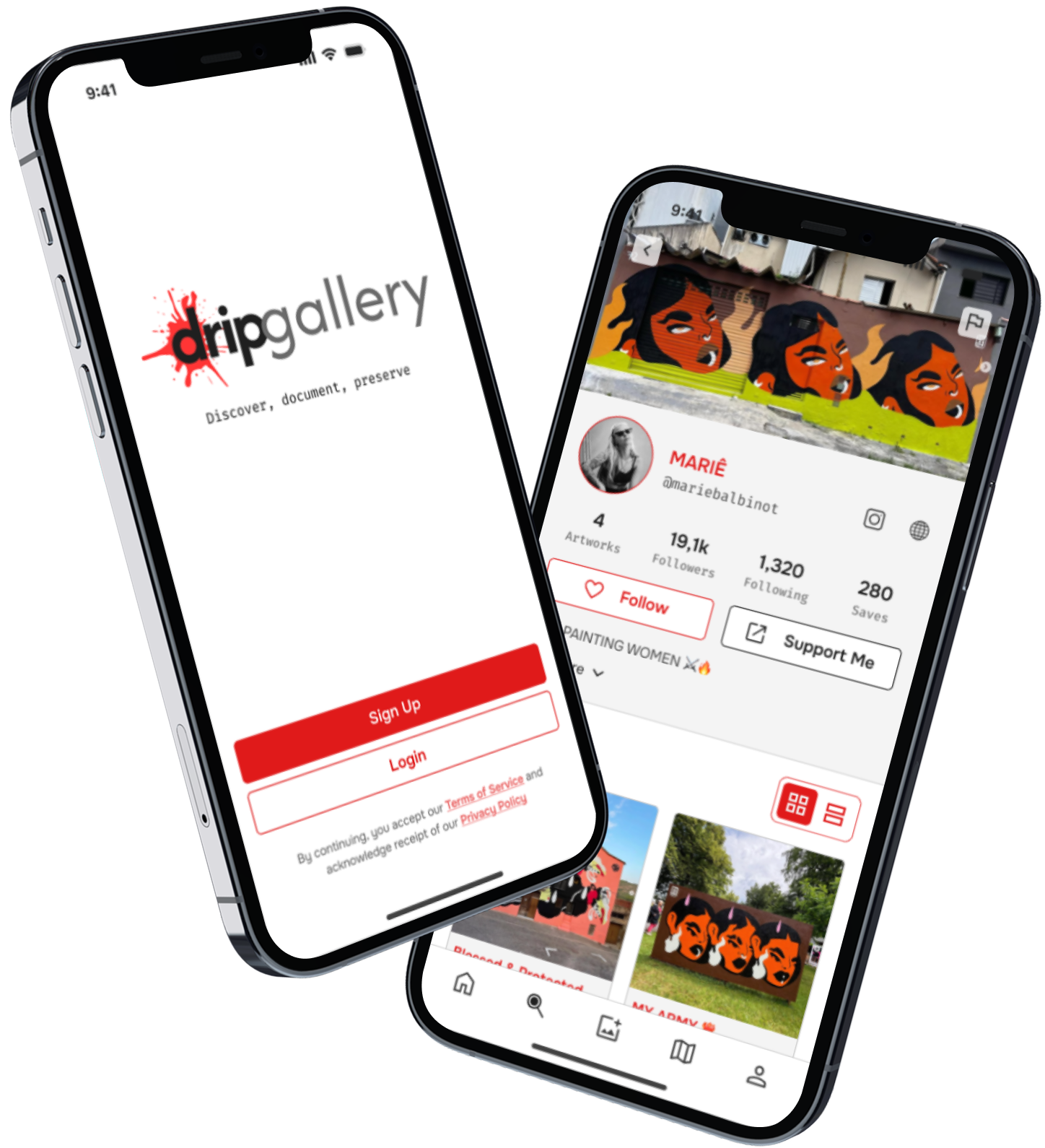
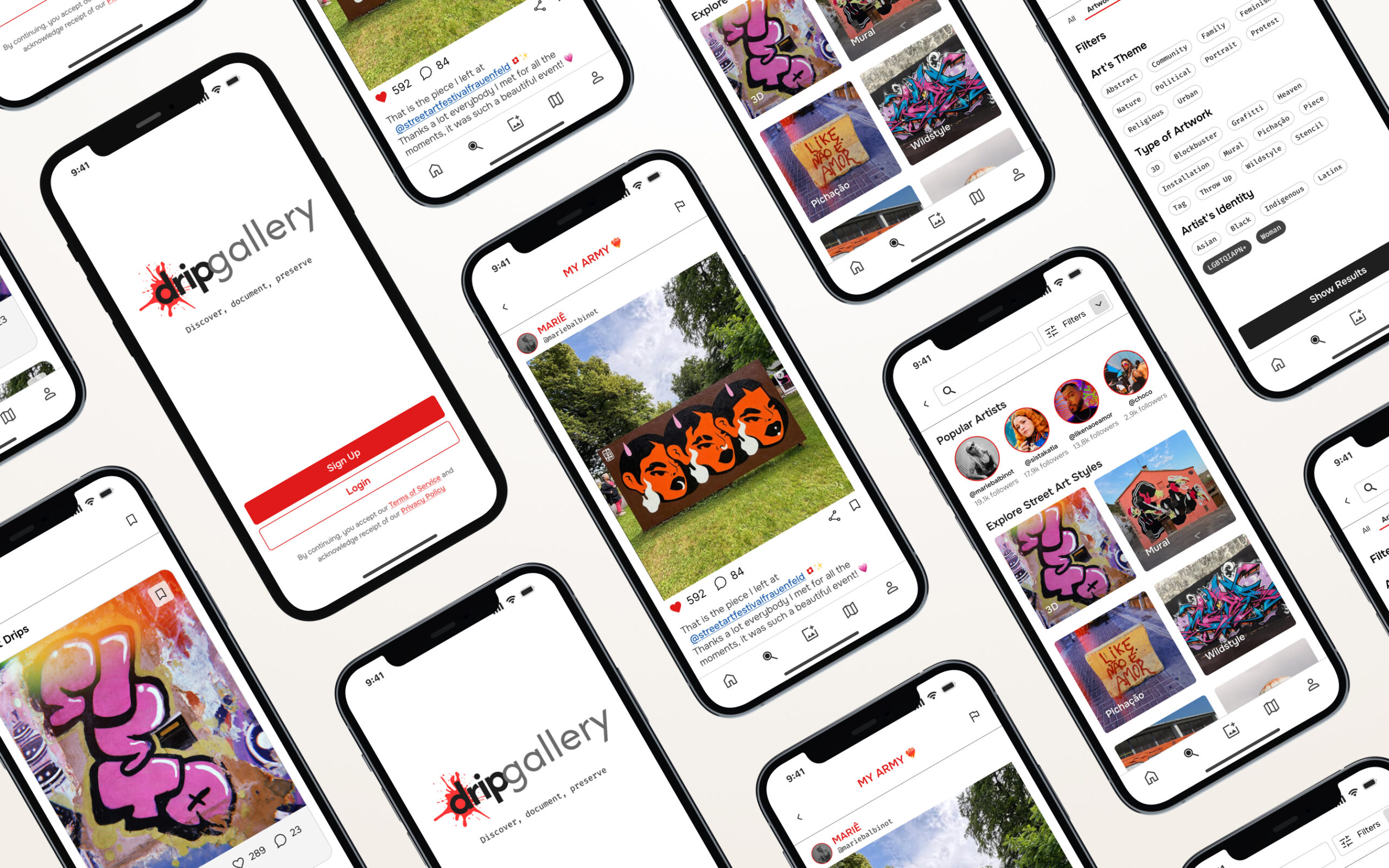
Drip Gallery is a mobile platform that allows users to discover, document, and celebrate street art from around the world. Featuring a powerful map-based interface, users can explore murals nearby or search for their favorite artists. Artists can tag and verify their own work, while the community collaborates by uploading photos of undocumented pieces. By providing an intuitive and inclusive space, the app brings visibility to street art and amplifies the voices of underrepresented artists, ensuring this ephemeral art form is preserved for all.
Understanding the Landscape
Competitor's analysis summary
To define the unique value proposition of Drip Gallery, a comprehensive competitive analysis was conducted, focusing on platforms that cater to art sharing, discovery, or local exploration. The key competitors identified were Instagram, StreetArtCities, and Spotted by Locals.
Instagram
Instagram demonstrates the power of visual appeal and network effects but highlights the need for a dedicated, structured platform with robust mapping, artist attribution features and specific search filters for artists or easy artist verification.
street art cities
StreetArtCities provides a strong foundation for map-based discovery and artist profiles. However, it underscores the need for enhanced community contribution tools, historical tracking, and features for preserving ephemeral art (like AR to visualize past works).
spotted by locals
Spotted by Locals highlights the value of trusted, localized content. For our app, it reinforces the need for street art-specific focus, robust community contribution features, and intuitive navigation to ensure users can actively engage with and document art.
Existing platforms fail to combine global map-based discovery, community-driven preservation, and artist amplification. Our app fills this gap by offering a dedicated map-centric interface, artist verification, and inclusive discovery filters.
DESIGNED FOR REAL PEOPLE
Meet Mateo, Lena and Jamie three personas who represent the diverse needs of our users.
MATEO RIVERA, 35
The Visionary Street Artist
Full-time street artist and muralist
BACKGROUND
Mateo grew up in a vibrant urban neighborhood where street art was a form of rebellion and expression. He now travels globally, leaving his mark on city walls with large-scale murals that blend surrealism and social commentary. Mateo is passionate about using art to spark conversations about inequality and environmental issues.
needs AND GOALS
To find legal walls or spaces where he can create large-scale murals without legal repercussions.
To collaborate with other artists and communities to amplify his message.
To monetize his art through commissions, merchandise, and gallery exhibitions.
FRUSTRATIONS
Limited access to legal spaces for street art.
Lack of funding for large projects.
Negative stereotypes about street artists being vandals.
Frequently Used Apps
Instagram
Procreate
Google Maps
PayPal
MATEO RIVERA, 35
The Visionary Street Artist
Full-time street artist and muralist
BACKGROUND
Mateo grew up in a vibrant urban neighborhood where street art was a form of rebellion and expression. He now travels globally, leaving his mark on city walls with large-scale murals that blend surrealism and social commentary. Mateo is passionate about using art to spark conversations about inequality and environmental issues.
needs AND GOALS
To find legal walls or spaces where he can create large-scale murals without legal repercussions.
To collaborate with other artists and communities to amplify his message.
To monetize his art through commissions, merchandise, and gallery exhibitions.
FRUSTRATIONS
Limited access to legal spaces for street art.
Lack of funding for large projects.
Negative stereotypes about street artists being vandals.
Frequently Used Apps
Procreate
Instagram
Google Maps
PayPal
LENA CARTER, 28
The Community-Focused Street Artist
Part-time street artist and art teacher
BACKGROUND
Lena is a community-driven artist who uses stencils and spray paint to create politically charged art in her local neighborhood. She teaches art classes to underprivileged youth and believes in the power of art to unite and educate. Her work often highlights LGBTQ+ rights and racial justice.
needs AND GOALS
To secure grants or sponsorships for community art projects. repercussions.
To teach more workshops and inspire the next generation of artists.
To protect her art from being erased or painted over.
FRUSTRATIONS
Limited funding for community projects.
Censorship or removal of her art by local authorities.
Balancing her passion for art with financial stability.
Frequently Used Apps
Canva
Facebook
GoFundMe
TikTok
JAMIE MORGAN, 24
The Art Enthusiast
Art history student and blogger
BACKGROUND
Jamie is an art lover who spends her free time exploring street art in different cities and documenting it on her blog. She is passionate about the intersection of art and social justice and often interview artists for her platform. Jamie dreams of curating an exhibition featuring underground street artists.
needs AND GOALS
To discover new street art and artists to feature on their blog.
To build a network of artists and curators for future collaborations.
To monetize their blog through sponsorships or ads.
FRUSTRATIONS
Difficulty finding accurate information about artists or the stories behind their work.
Limited reach for their blog due to algorithm changes on social media.
Balancing their passion project with academic responsibilities.
Frequently Used Apps
WordPress
Pinterest
X
Patreon
LENA CARTER, 28
The Community-Focused Street Artist
Part-time street artist and art teacher
BACKGROUND
Lena is a community-driven artist who uses stencils and spray paint to create politically charged art in her local neighborhood. She teaches art classes to underprivileged youth and believes in the power of art to unite and educate. Her work often highlights LGBTQ+ rights and racial justice.
needs AND GOALS
To secure grants or sponsorships for community art projects. repercussions.
To teach more workshops and inspire the next generation of artists.
To protect her art from being erased or painted over.
FRUSTRATIONS
Limited funding for community projects.
Censorship or removal of her art by local authorities.
Balancing her passion for art with financial stability.
Frequently Used Apps
Canva
Facebook
GoFundMe
TikTok
JAMiE MORGAN, 24
The Art Enthusiast
Art history student and blogger
BACKGROUND
Jamie is an art lover who spends her free time exploring street art in different cities and documenting it on her blog. She is passionate about the intersection of art and social justice and often interview artists for her platform. Jamie dreams of curating an exhibition featuring underground street artists.
needs AND GOALS
To discover new street art and artists to feature on their blog.
To build a network of artists and curators for future collaborations.
To monetize their blog through sponsorships or ads.
FRUSTRATIONS
Difficulty finding accurate information about artists or the stories behind their work.
Limited reach for their blog due to algorithm changes on social media.
Balancing their passion project with academic responsibilities.
Frequently Used Apps
WordPress
Pinterest
X
Patreon
PROBLEM STATEMENT:
Street art enthusiasts and artists lack a centralized, user-friendly mobile platform to collaboratively discover, document, and preserve the ephemeral nature of street art, leading to lost cultural records and unacknowledged artistic contributions.
Insights Shaping the Experience
To ensure the app genuinely addresses user needs, in-depth interviews were conducted with diverse street artists and enthusiasts. These conversations unveiled critical pain points and desires, directly shaping the app’s core functionality.
Key Pain Points & User Voices:
Visibility & Discovery: Finding specific street art or diverse artists is a major challenge on current platforms. As enthusiast T.O. lamented, existing tools “only shows artists from São Paulo or abroad. Hard to find works by women, LGBTQIA+, Indigenous artists or from smaller cities.” Artist B.V. echoed this, noting that despite art being “real, …visibility depends on algorithms.”
Documentation & Preservation: The ephemeral nature of street art leads to significant loss. Artist B.V. shared a critical pain point: he “lost his entire portfolio on Instagram (account deleted without warning).” This highlights the urgent need for a reliable archive, with enthusiast T.M. advocating for a “virtual museum” to document “erased art.“
Safety & Repression: For many artists, creating art on the streets comes with severe risks. Artist S.K. revealed, “Faced police violence in the 90s… Now deals with street harassment.” The real threat of repression meant a shared “demand for anonymous profiles and location control” for vulnerable artists.
Financial Barriers: Many artists struggle financially. S.K. noted “High material costs (spray cans)” and I.B. highlighted “bureaucratic grants.“
Core Feature Requests & Solutions
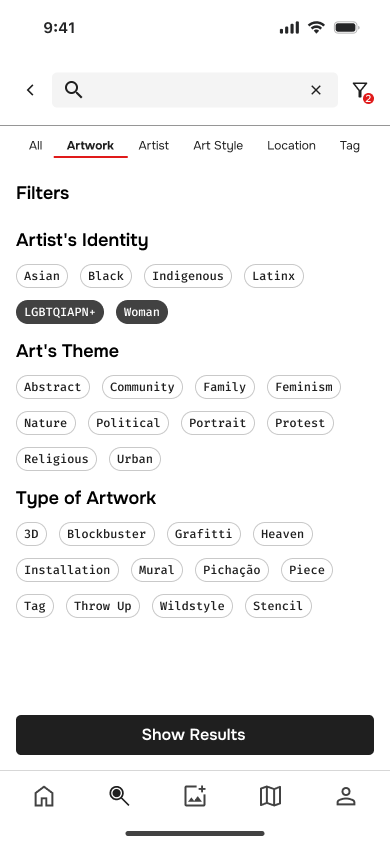
Advanced Filters: To combat discovery issues, interviewees universally requested granular filters by identity (gender, race, LGBTQIA+), location, and theme.
Interactive Art Map: Essential for discovery and documentation, with critical safety overlays to prevent repression for artists.
Artist Narratives: To deepen engagement, the app will allow artists to share stories behind their work, moving beyond just images.
Anonymous Mode: A crucial safety feature for at-risk artists, allowing them to contribute without personal exposure.
*Disclaimer: All artist names and artwork photos featured in this case study’s wireframes are real and were used with full permission from the artists. We are deeply grateful for their collaboration and their willingness to share their experiences and creations.
How might we design a platform that empowers enthusiasts to discover niche street art and marginalized artists, while giving artists control over how their work is categorized and found?
the checklist for a better app
From user interviews and competitive analysis, I distilled 5 non-negotiable features to address unmet needs:
Interactive map with geotagging and safety controls
Robust art upload and community contribution system
Advanced search and filtering (specially identity-based)
Artist profiles with verification and attribution
Ephemeral art archive / history tracking
Interactive map with geotagging and safety controls
Robust art upload and community contribution system
Advanced search and filtering (specially identity-based)
Artist profiles with verification and attribution
Ephemeral art archive/ history tracking
from sketches to screns
The evolution of Drip Gallery's design
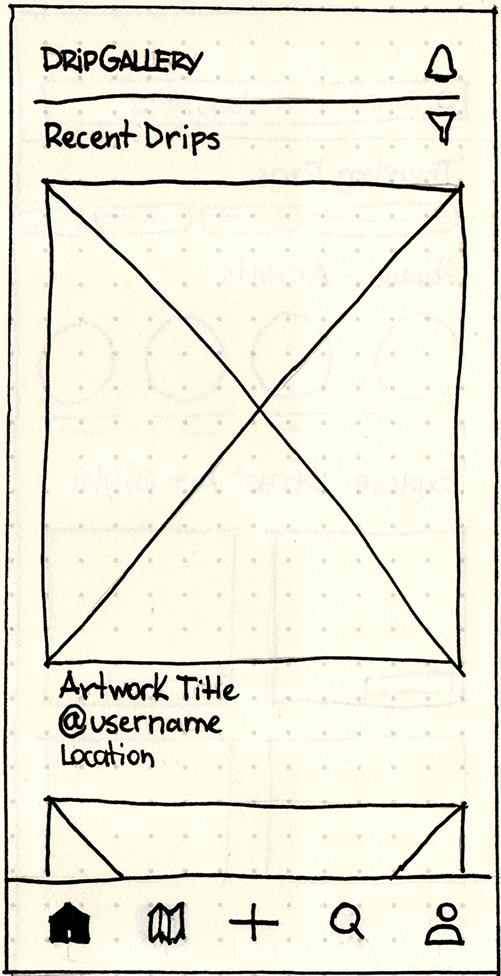
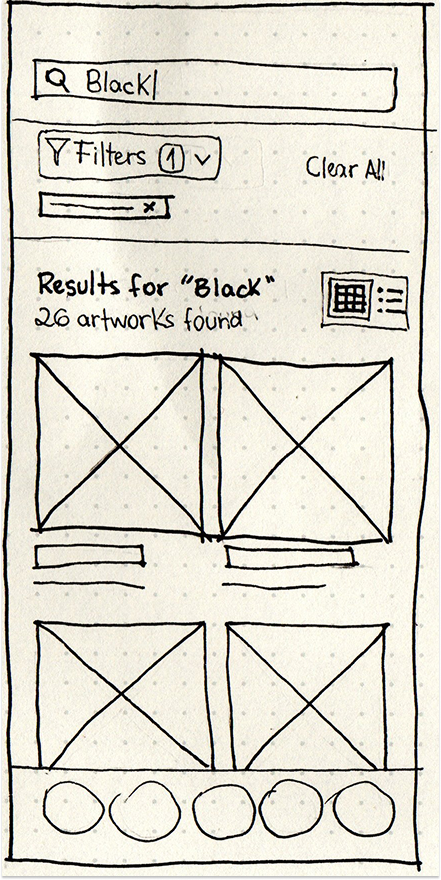
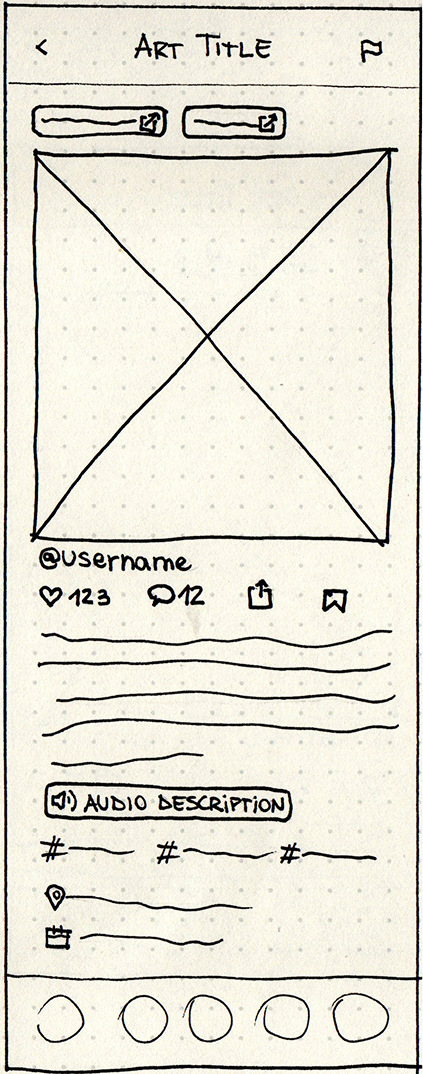
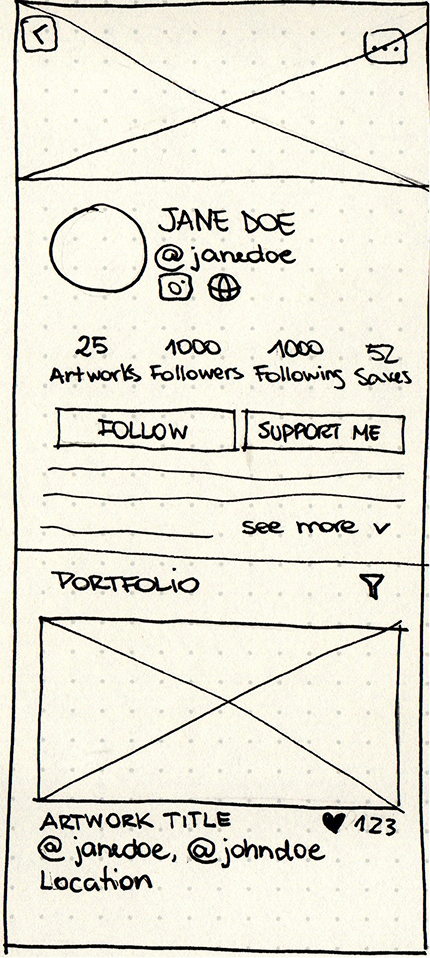
low fidelity wireframes
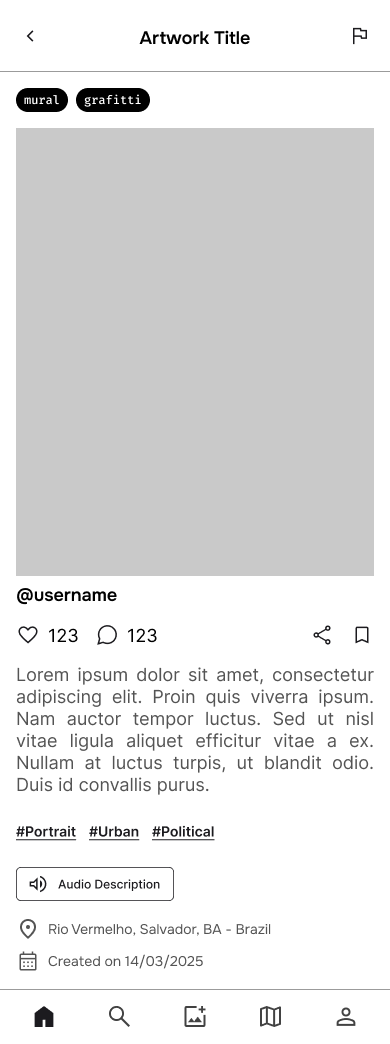
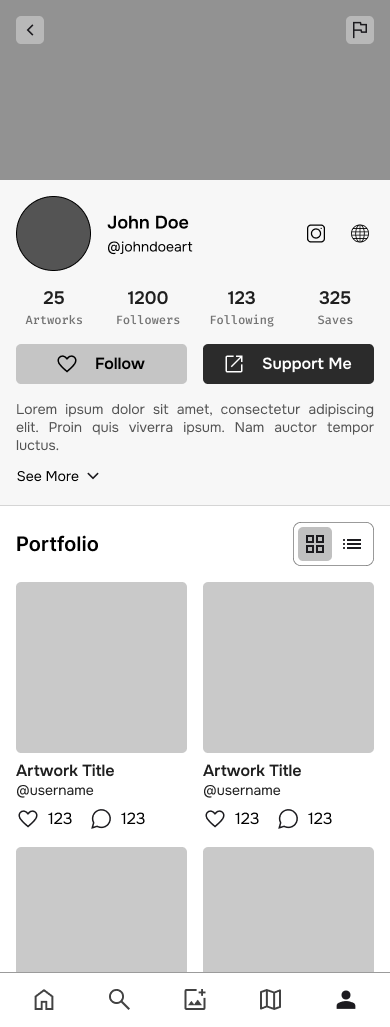
The low-fidelity wireframes established the app’s basic structure, content hierarchy, and user flows. These simple sketches focused on functionality, helping define the layout of core screens like the Homepage/Feed, Search/Discover, Post Page, and Artist’s Page, ensuring a seamless user experience from the outset.
mid fidelity wireframes
The mid-fidelity wireframes introduced greater detail, focusing on refining layout, spacing, and initial interactive elements. These frames allowed for deeper exploration of the app’s design, ensuring clarity in navigation and usability across key screens.
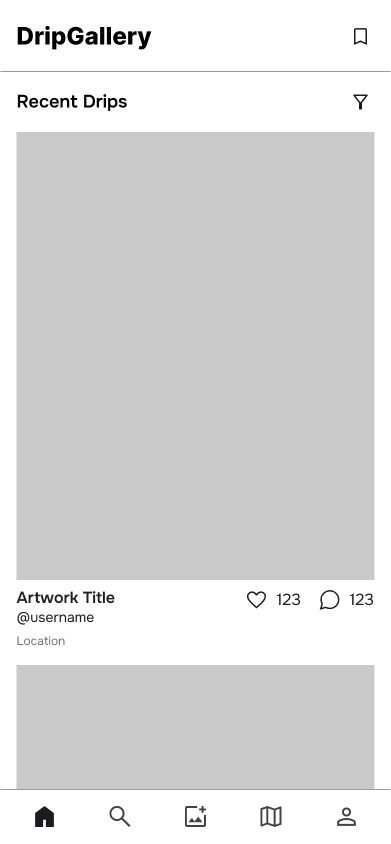
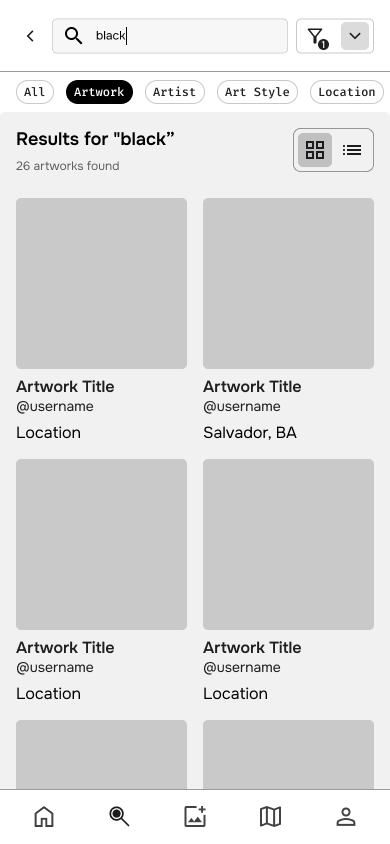
high fidelity prototype
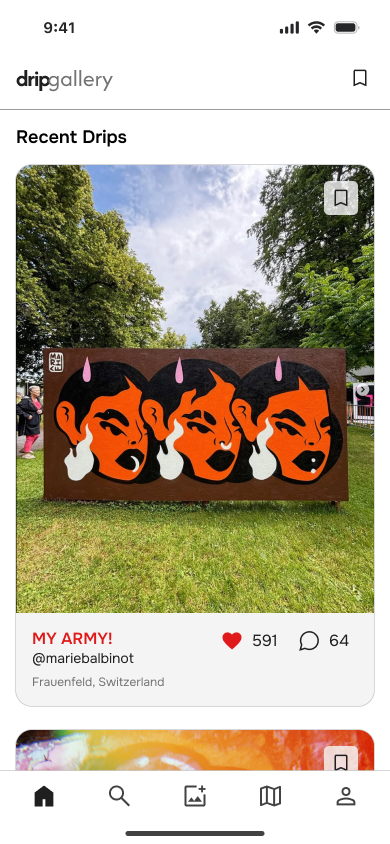
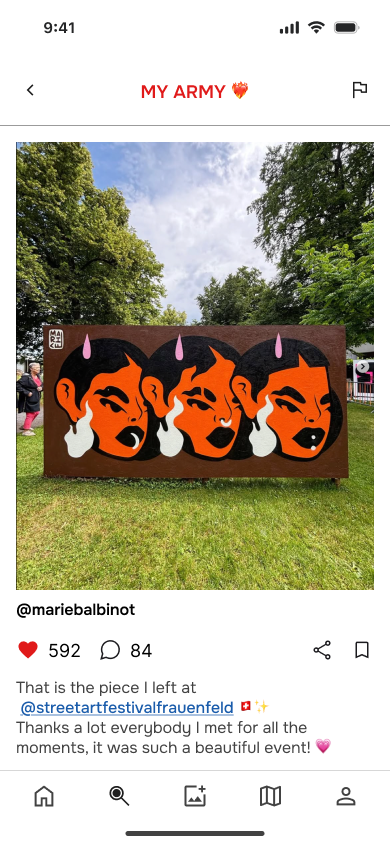
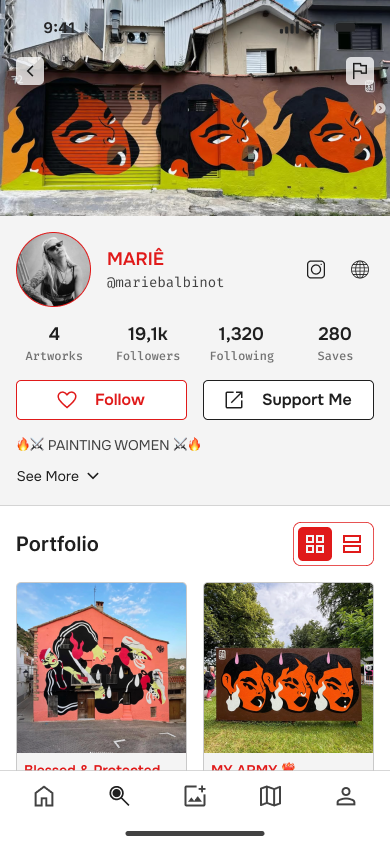
The high-fidelity wireframes applied colors, fonts, and visual design elements to bring the app’s look and feel closer to the final product. These wireframes, created before usability testing iterations, showcased polished versions of the Homepage/Feed, Search/Discover, Post Page, and Artist’s Page while laying the groundwork for further revisions.
DEVELOPING THE APP'S VISUAL IDENTITY
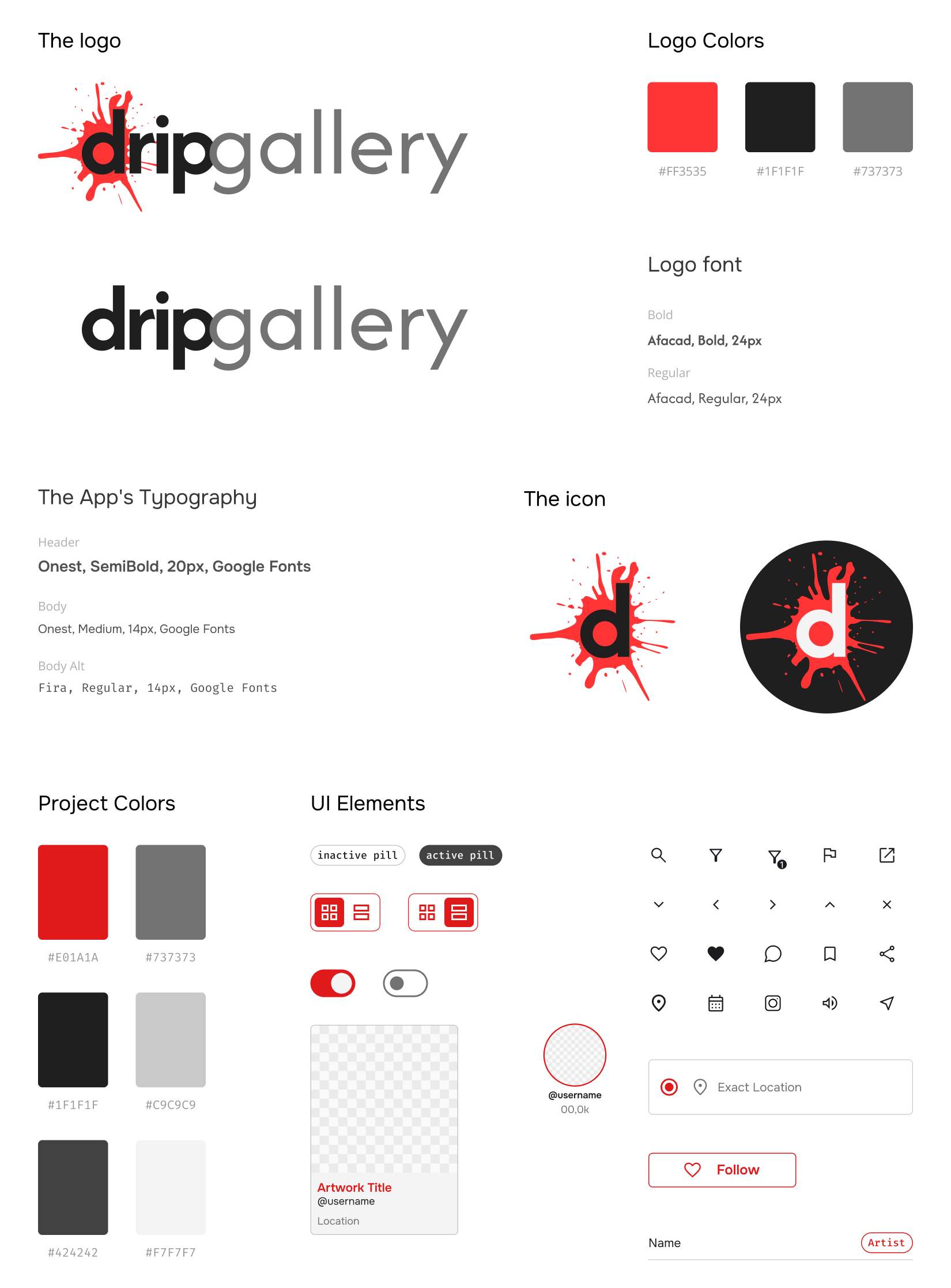
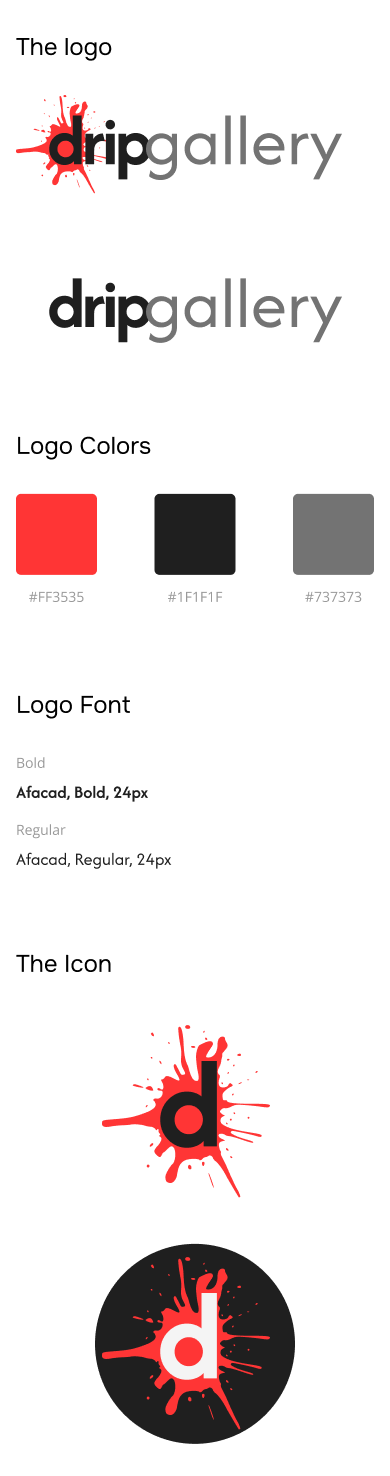
Bold, disciplined, uncluttered – Letting the art shine. The Drip Gallery brand reflects the raw energy of street art with a clean, functional aesthetic.
TESTING, LEARNING, ITERATING
Refining the design through user feedback
usability testing
Tests were conducted with 5 participants across varying backgrounds and familiarity levels with similar apps. Each session followed a structured method using two primary task flows:
Discover & View Artist Profile: Participants were asked to use search and filter features to find a specific demographic of artists (e.g., LGBTQIAP+ women) and view their profile.
Upload Artwork: Participants were guided to upload a photo of artwork, filling out essential fields such as description, location, and tags.
key insights
Usability testing revealed several key insights to enhance the Drip Gallery experience. During testing, an earlier iteration of the filter icon (lines and dots) caused confusion, as participants struggled to identify it and associate it with filtering functionality. After updating the icon to a more recognizable slider/knob symbol accompanied by the word “Filters”, subsequent tests confirmed that this change significantly improved usability and discoverability. Additionally, while the filter feature became easier to find, participants suggested reordering filter options to prioritize art styles over artist identity within the Artwork section for better organizational logic. Confusion arose from the separation of art styles and thematic tags, with many users advocating for a unified tagging system to simplify categorization and exploration. Linking street art styles to educational articles was also seen as potentially biased and conflicting with artists’ personal interpretations, leading to the recommendation that these links instead redirect to tagged search pages.
iterations
Based on testing feedback, several key changes were implemented to improve usability and clarity. Filters were reorganized to display art styles before artist identity in the Artwork section, ensuring better alignment with user expectations. The dual approach to tags was consolidated into a single tagging system that allows users to categorize both styles and themes seamlessly. To address conflicts around defining art styles, the Explore page’s style cards were updated to redirect users to search pages featuring tagged artworks, eliminating educational articles entirely. Visual cues, such as underlined text, were added to clickable elements for better discoverability. These changes brought the prototype closer to delivering a seamless, intuitive, and user-centered experience.
DRIP GALLERY - DISCOVER, DOCUMENT, PRESERVE
A platform dedicated to showcasing and preserving street art by connecting users to marginalized artists, creating a global archive, and inspiring discovery through meaningful interactions.
core features
Drip Gallery focuses on fostering discovery and collaboration by allowing users to find marginalized artists, upload street art, explore themes, and preserve artistic culture with ease and flexibility.
user flow
Designed for simplicity and clarity, the app guides users seamlessly through discovering street art, exploring profiles, and contributing to the global archive.
Visual design
With a clean layout, bold visuals, and intuitive navigation, the app highlights the vibrancy of street art while ensuring usability and accessibility.
Exploring the featuress
Experience our solution through these key user flows
Discover & View Artist Profile
This flow showcases how users can navigate the Discover page, apply identity-based filters (e.g., Woman + LGBTQIAP+), and explore profiles of marginalized artists. Within seconds, users can view search results, tap a specific artwork, and access the artist’s profile to learn more about their contributions to street art.
Upload Artwork
This flow highlights the process of sharing street art on the platform. Users can select an image, add a description, input a general or anonymous location, and tag relevant themes or styles. The intuitive design ensures a seamless upload experience, while safety features like visibility options empower artists to share art securely and thoughtfully.
Explore Art via Geolocation
This flow demonstrates the interactive map feature, where users can browse artworks based on location. Advanced filters allow narrowing results by themes, styles, or artist identities, offering a dynamic and immersive exploration experience. The geolocation feature connects users to street art near them while preserving the essence of local creativity.This flow demonstrates the interactive map feature, where users can browse artworks based on location. Advanced filters allow narrowing results by themes, styles, or artist identities, offering a dynamic and immersive exploration experience.
Growing with our users
The Drip Gallery MVP lays a strong foundation for discovering, documenting, and preserving street art, but there’s always room for growth. As we gather insights from real users, we envision rolling out features that amplify the user experience, empower artists, and provide innovative ways to engage with the community. Below are some of the exciting possibilities for future development:
Suggested Street Art Tours (Premium)
Experience Street Art through Curated Journeys This premium feature will guide users through curated walking or driving tours of street art in specific regions. It integrates tourism with cultural discovery and offers the app a way to generate steady revenue while promoting regions rich in street art.
Collaboration & Opportunity Alerts
Connecting Artists with Possibilities A feature that notifies artists of mural opportunities, active collaborations, or artistic gatherings based on their preferences and location. This will foster a collaborative community while empowering artists to seize new opportunities that align with their creative goals.
Marketplace Integration
Turning Creativity into Sustainability
A future integration that allows artists to monetize their work by selling prints or merchandise directly through the app. This feature will support financial sustainability for creators while fostering deeper engagement with buyers seeking to connect with their favorite artists.
Street Art Documentation by the Community
Bringing the Community into the Creative Process Users strolling through the streets will be able to photograph street art they encounter and upload it to the platform. These uploads will remain unclaimed until the original artist verifies the artwork and formally links it to their portfolio. This participatory feature will create a bridge between the community and artists, expanding the archive while respecting proper attribution and authorship.
Artist Verification & Claim System
Empowering Artists through Authorship Building a robust mechanism for artists to verify their identity and formally claim authorship of their works ensures proper attribution and protects against misuse. This feature will strengthen trust within the app while celebrating creators’ invaluable contributions.
Augmented Reality (AR) for Past Artworks
Bringing Lost Art Back to Life Imagine using the app to see a digital overlay of a past artwork in its original location—even if the wall has been painted over. This feature will turn ephemeral art into timeless experiences, allowing users to interact with street art history through cutting-edge technology.